HIIVE: during the coldest months
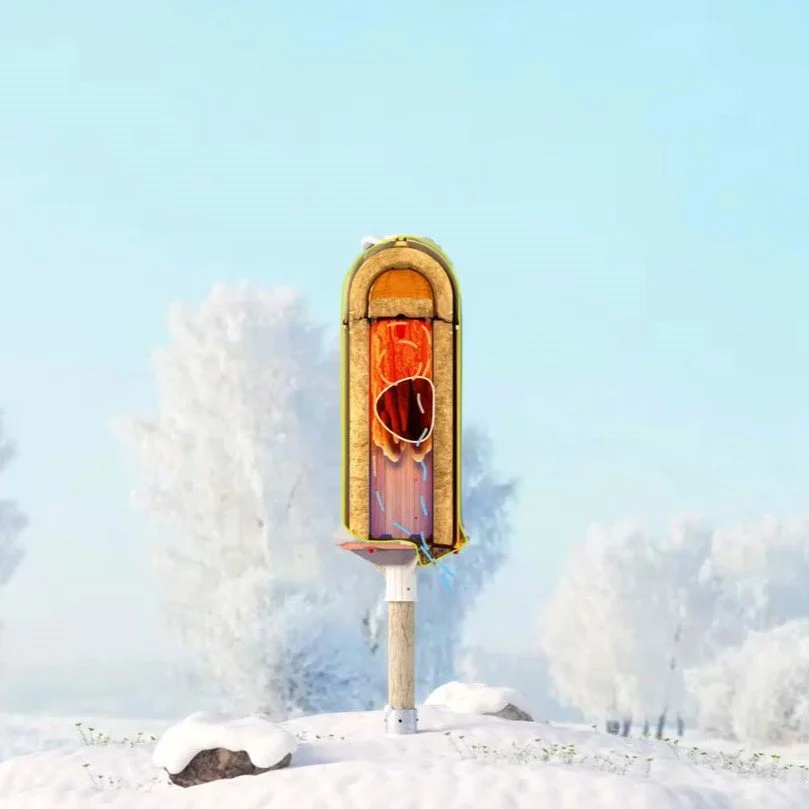
During cold months, your HIIVE is engineered to support optimal thermodynamic and hydrodynamic conditions by emulating the insulating properties of natural tree cavities.
🌡️ Thermodynamic Efficiency HIIVE structures are designed to conserve the bees’ energy by maintaining a stable internal climate. The materials and geometry of the hiive reduce heat loss, allowing bees to survive harsh winters with minimal metabolic strain. This insulation mimics the thermal buffering found in tree hollows, such as a 200-300 oak tree, where temperature fluctuations are dampened. As a result, bees expend less energy on thermoregulation, preserving their food stores and enhancing colony resilience.
💧 Hydrodynamic Control Moisture management is critical during winter, when condensation can threaten colony health. HIIVEs design includes passive ventilation and water-resistant materials that prevent internal dampness. By controlling airflow and minimizing water ingress, the hiive reduces the risk of mould and maintains humidity levels conducive to colony survival. This hydrodynamic balance ensures that bees remain dry and healthy even in prolonged cold spells.
In essence, HIIVEs nature-inspired architecture offers a thermally stable and moisture-regulated environment, helping bees thrive through winter, and lean months, with reduced stress and energy expenditure. All features that align with HIIVEs mission to create species-appropriate habitats that support natural bee behaviour and long-term sustainability.